Group coaching combines the structure of a course with the intimacy of 1:1 work. It's one of the most scalable ways to coach, but it creates a specific admin challenge: managing a cohort of people moving through the same programme at the same time.
Most coaches patch this together with a video tool for calls, a separate platform for content, a social group for community, and a spreadsheet to track who is showing up. A connected system replaces all of it.
What makes group coaching different
Unlike a self-paced course, group coaching has a live, shared timeline. Everyone starts together, moves through modules together, and attends live calls together. That means:
- Enrolment happens in a window, not year-round.
- Content is released on a schedule, not all at once.
- Live calls need booking links and reminders sent to the whole cohort.
- The community aspect needs a space where members can interact.
- You need to see who is engaged and who has gone quiet.
Each of those is a separate admin job when the tools don't connect.
Manage cohort enrolment cleanly
Set up a sales page and checkout for the programme. When someone pays, the system should:
- Create or update their contact record.
- Tag them with the cohort name and start date.
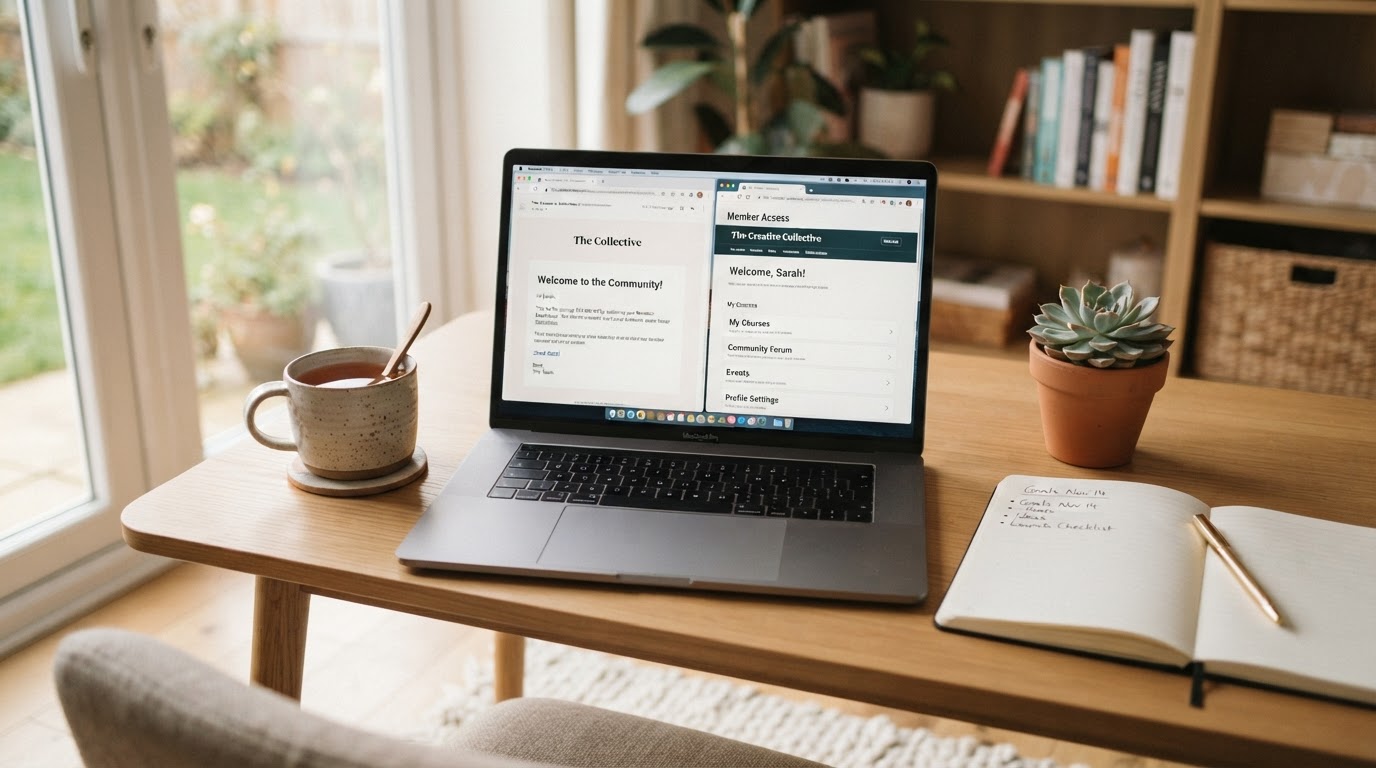
- Grant access to the programme area.
- Send a welcome email with what to expect and when.
- Add them to the community space.
Because enrolment is automated, you can focus on the coaching rather than manually adding people to a dozen different tools. You can see what RMM includes for courses, communities and connected enrolment.
Drip content on a schedule, not all at once
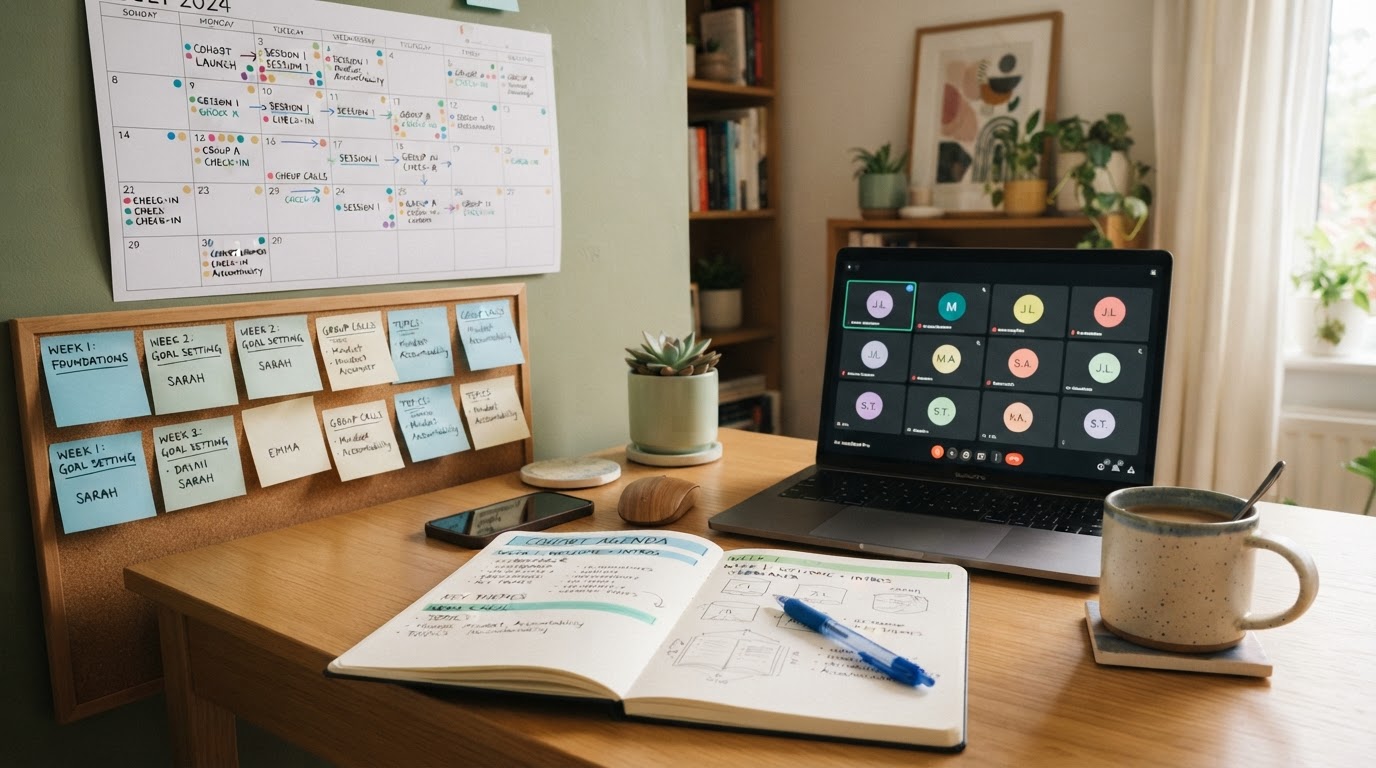
Releasing all content on day one kills engagement. A drip schedule keeps the cohort moving together:
- Module 1 available on the start date.
- Module 2 released one week later.
- Each release triggers an email announcing the new content.
- Reminders go out before each live call.
When content release, email announcements and call reminders are connected, the cohort experience feels coordinated rather than ad hoc.
Handle live calls and attendance
Group coaching lives or dies on live attendance. For each call:
- Send a calendar invite with the joining link to the whole cohort.
- Send a reminder the day before and an hour before.
- After the call, send a replay link and any resources.
- Record attendance against each contact so you can see who missed it.
When attendance is tracked in the CRM, you can spot the member who has missed two calls in a row and reach out personally before they disengage completely.
Give the group a place to talk
The community aspect is what makes group coaching more valuable than a recorded course. Members learn from each other's questions, celebrate each other's wins, and feel accountable to the group.
A built-in community space, connected to the same contact records, means members don't have to join a separate social group and you don't have to manage a second platform. Access can be granted automatically on enrolment and removed when the programme ends.
Track who is engaged and who is slipping
The biggest admin challenge in group coaching is spotting who is falling behind before they disappear. A connected system lets you see, per member:
- Which modules they've completed.
- Which live calls they attended.
- Whether they've opened recent emails.
- Whether they've posted in the community.
Set up a simple automation: if a member hasn't logged in for 10 days, send a gentle check-in. If they've missed two calls, reach out personally. This is the difference between a cohort where most people finish and one where half quietly drop out.
Ready Made Marketer brings cohort enrolment, drip content, live call management, community and progress tracking into one connected system, so you can run a group coaching programme without patching five tools together. To compare plans, explore RMM pricing on our main site.