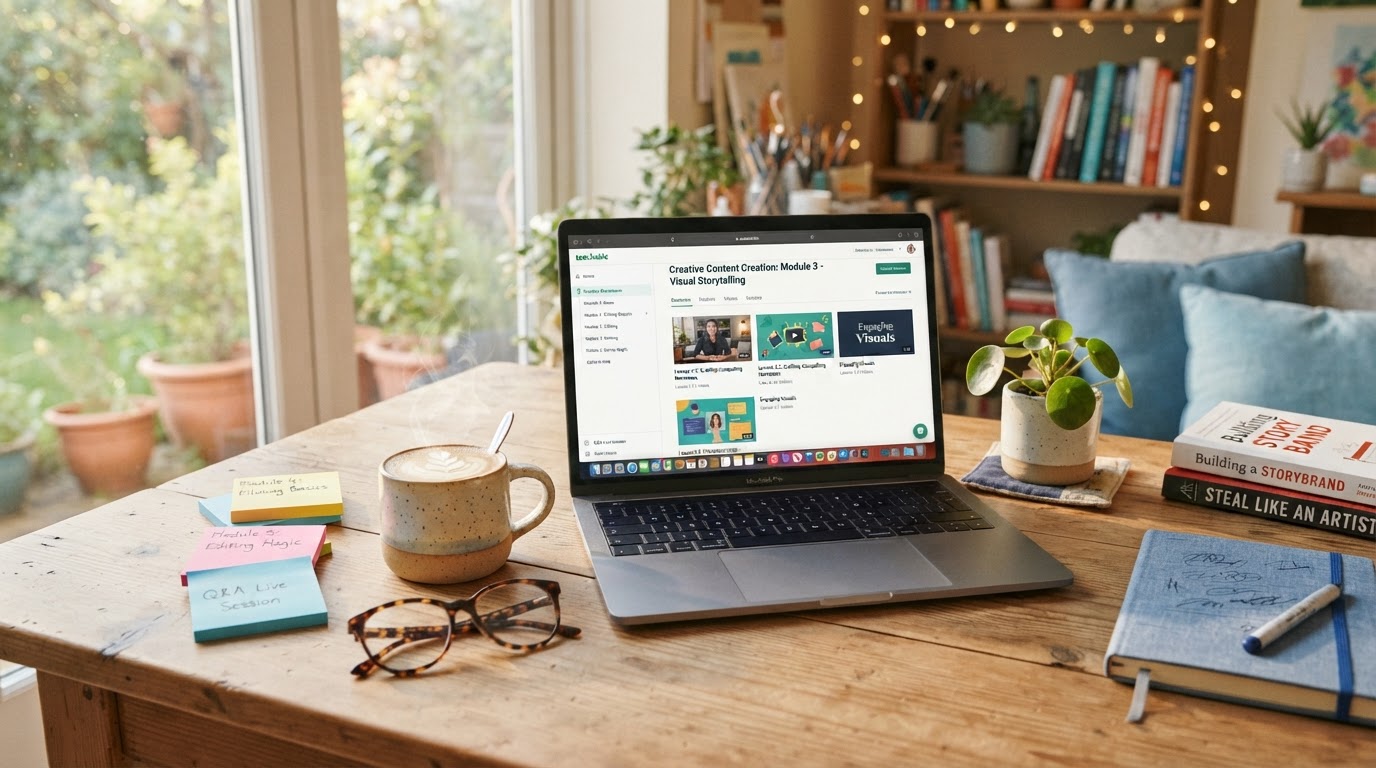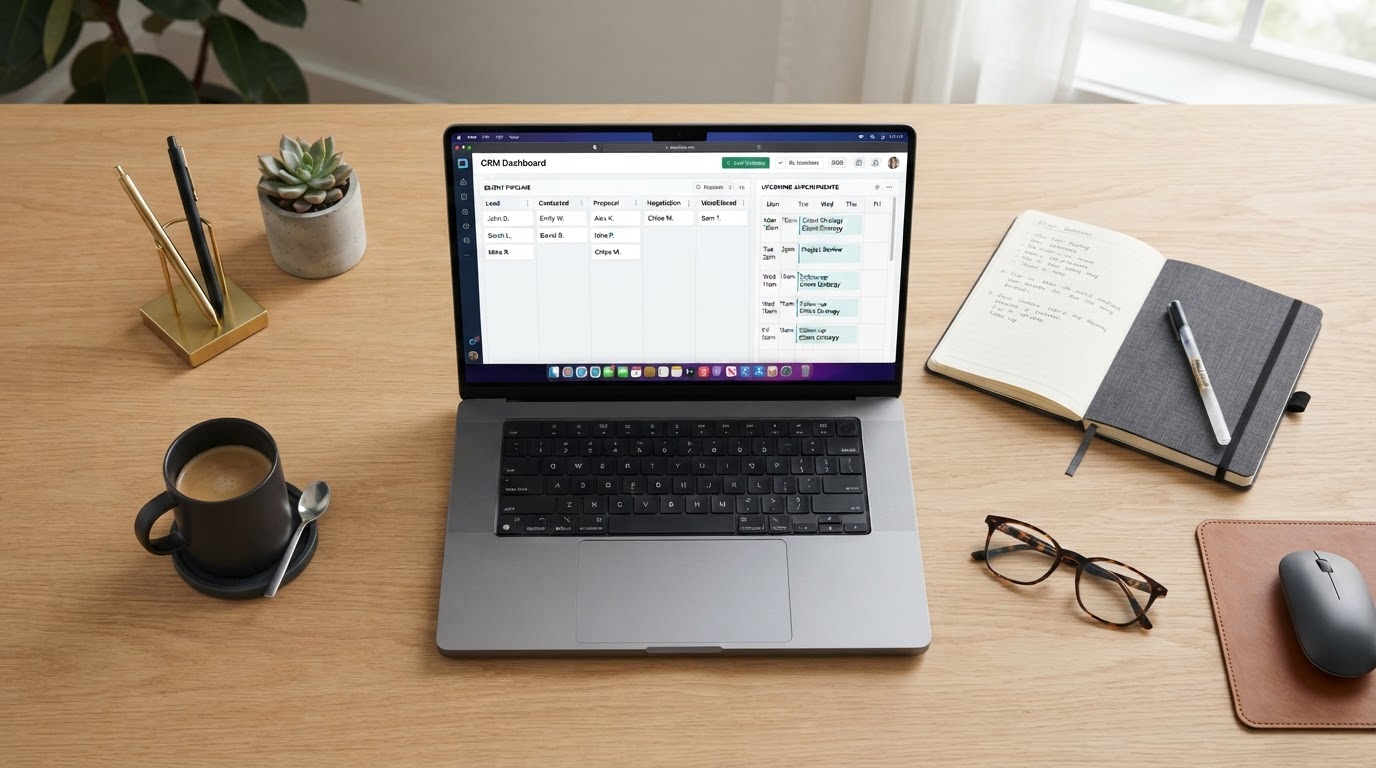
Course creation advice often focuses on recording lessons. The harder business problem is connecting the course to the pages, payments, emails and customer support around it.
A connected system lets you see the whole journey, from first enquiry to enrolment and delivery.
Validate the outcome before recording everything
Define who the course is for, the problem it solves and what a learner should be able to do by the end. Speak to potential customers and consider delivering the first version live.
You don’t need 40 polished videos to prove the idea. A focused course that gets someone to a useful result is easier to sell and complete.
Build the minimum course structure
Create modules around milestones rather than filling weeks. For each lesson, decide whether the learner needs video, text, a worksheet, a quiz or an action.
Make navigation predictable. Tell students what to do first, where to ask questions and how long each section is likely to take.
Connect the sales journey
The basic route includes:
- A sales page explaining the outcome and suitability.
- A checkout or payment link.
- Automatic access after successful payment.
- A welcome email with login instructions.
- Reminders or progress messages where useful.
- A clear support route.
Test the route using a low-value test product or payment mode where available. Check what happens after successful and failed payments.
Plan for more than the launch
Decide whether the course is available all year or opens at set times. Create an onboarding sequence, completion message and invitation to the next suitable offer.
Keep learner information connected to the CRM. That lets you distinguish a prospect from an enrolled student and avoids promoting a course to somebody who already bought it. If you want to compare plans for course delivery and CRM, you can view RMM pricing.
Choose a platform around the whole business
Kajabi, Kartra, MemberVault, HighLevel-powered platforms and other course tools take different approaches. Some lead with the learning experience, while others place stronger emphasis on CRM, funnels or automation. If you want to test the underlying HighLevel platform directly, you can start a 14-day HighLevel trial.
Sandra Harnett uses RMM to clone courses rather than starting each one from scratch, create different membership levels and notify members when new content is added. Helen Greenwood also uses RMM for memberships and courses.