Taking payment is the moment your coaching business becomes a business. Yet many coaches handle it with a patchwork of Stripe links, manual invoices, a spreadsheet to track who has paid, and an uncomfortable text when someone forgets.
A connected system lets you take payment, record it against the client, grant access or book the session, and chase overdue invoices automatically, all without a separate billing tool.
The payment options coaches actually need
Most coaching businesses need three types of payment:
- One-off payments for single sessions, courses or programmes.
- Payment plans for higher-ticket programmes split across months.
- Recurring subscriptions for ongoing monthly coaching or memberships.
Each type should connect to the client's contact record so you can see, at a glance, who has paid, what they bought, and what's outstanding.
Take one-off payments cleanly
For a single session or programme, a checkout page connected to your CRM is cleaner than a raw payment link. The client pays, the system records the transaction against their contact, and it can trigger the next step automatically, whether that's booking a session, granting course access, or sending a welcome email.
You avoid the common gap where someone pays but nothing happens afterwards because the payment tool doesn't talk to your calendar or email.
Set up payment plans without manual chasing
Payment plans make higher-ticket coaching accessible, but they create admin: remembering to charge the second instalment, the third, chasing when a card expires. A connected system handles this with automated recurring billing.
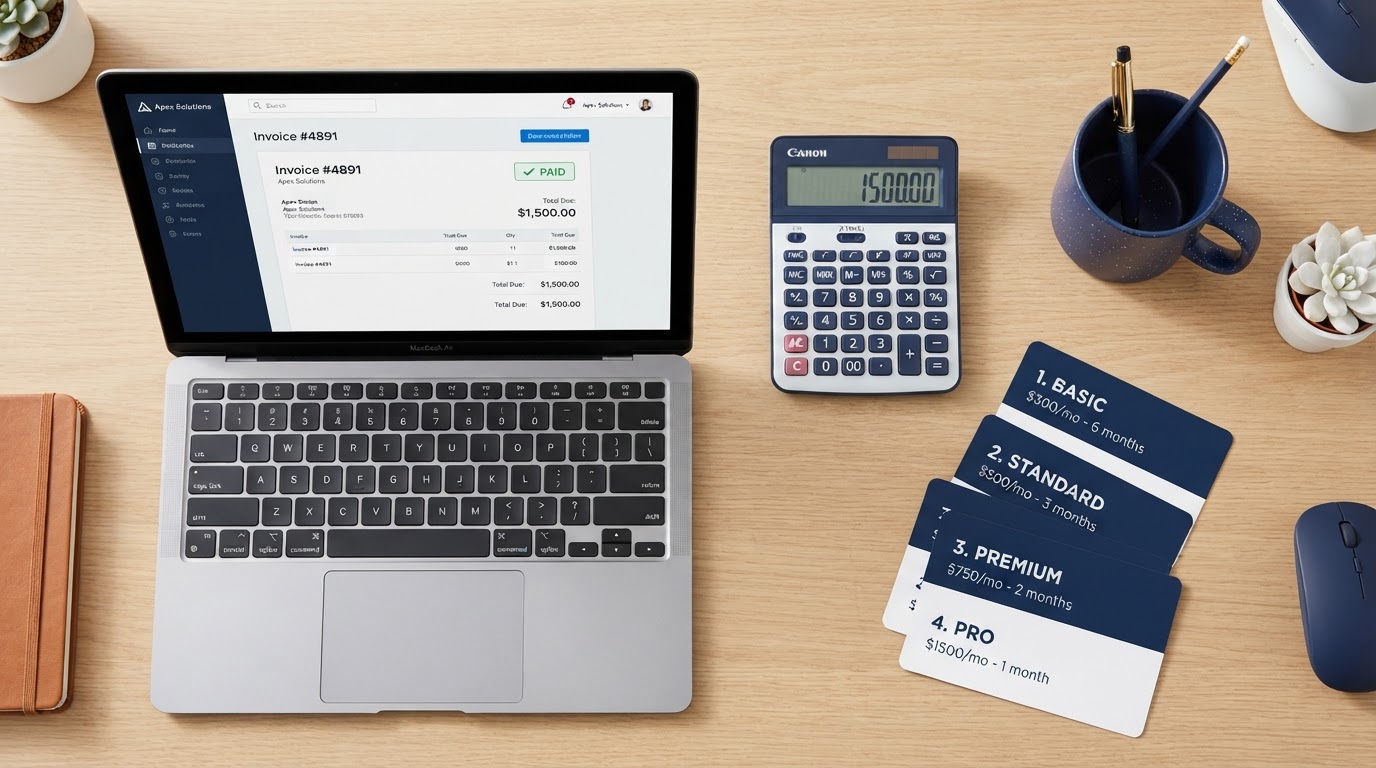
Set the plan once: three monthly payments of a set amount, starting on the purchase date. The system charges the card automatically each month, records each payment, and flags any failed attempts. You can see the current RMM plans to check how payments and invoicing are included.
Handle recurring billing for ongoing coaching
For monthly coaching retainers or memberships, recurring billing means the payment happens in the background. The client signs up once, and the system charges their card each month until they cancel.
Connect the subscription to their access: if a payment fails, the system can pause access and trigger a dunning email asking them to update their card. If they cancel, access is removed on the appropriate date. You don't have to remember to revoke anything manually.
Generate invoices and track what's paid
Some clients, particularly corporate or B2B coaching clients, need invoices. A connected system can generate an invoice when a payment is taken or when you send a manual request, and record the payment status against the contact.
The benefit is visibility. Instead of checking Stripe, your bank, and a spreadsheet to work out who owes what, you see it all on the contact record: the invoice, the amount, the status, and the date paid.
Automate the awkward part: chasing overdue payments
Chasing unpaid invoices is the part most coaches dislike. A short automated sequence handles it without the personal discomfort:
- Due date: the invoice is sent with a payment link.
- 3 days overdue: a polite reminder with the same link.
- 7 days overdue: a firmer reminder noting the account is on hold.
- 14 days overdue: a final notice before access is paused.
Each message should be polite, clear, and include a single payment link. Most overdue invoices get paid after the first or second reminder, and you never had to write the email yourself.
Ready Made Marketer connects payments, invoices, payment plans, recurring billing and automated chasing in one system, so the financial side of your coaching business runs without a separate billing tool. To compare options, explore RMM pricing on our main site.